Research aims

Research

The nucleus accumbens is a well-studied area of the forebrain that influences the eagerness with which animals seek out rewards as well as the pleasure they derive from consuming them. It regulates motivational processes and reinforcement learning. Aberrant signalling in the nucleus accumbens has been linked to a variety of psychiatric conditions, including addiction, OCD, and schizophrenia. In general this structure is thought to integrate contextual, emotional, and motivational cues to initiate and coordinate reward seeking behaviour.

The Britt lab is currently trying to understand what kind of information is encoded in the different inputs to the nucleus accumbens as well as how this information ultimately gets integrated into an action plan. We hope to establish exactly when each input to this integrative structure is both active and consequential to behaviour. To address these questions the Britt lab studies rodents and uses calcium imaging techniques, such as fiber photometry, in combination with optogenetic manipulations. Our goal is to understand the causal relationship between neural circuit activity and behaviour with millisecond and pathway-specific precision.

The Britt lab is also trying to understand how pathway-specific neural circuit activity is altered in rodent models of psychopathology as well as how it changes in response to popular medications. Insights gained from this kind of neural circuit-mapping approach have already been used in the development of highly specific therapeutic interventions designed to improve the lives of patients afflicted by mental illness.
Research themes

01

Inputs to the nucleus accumbens

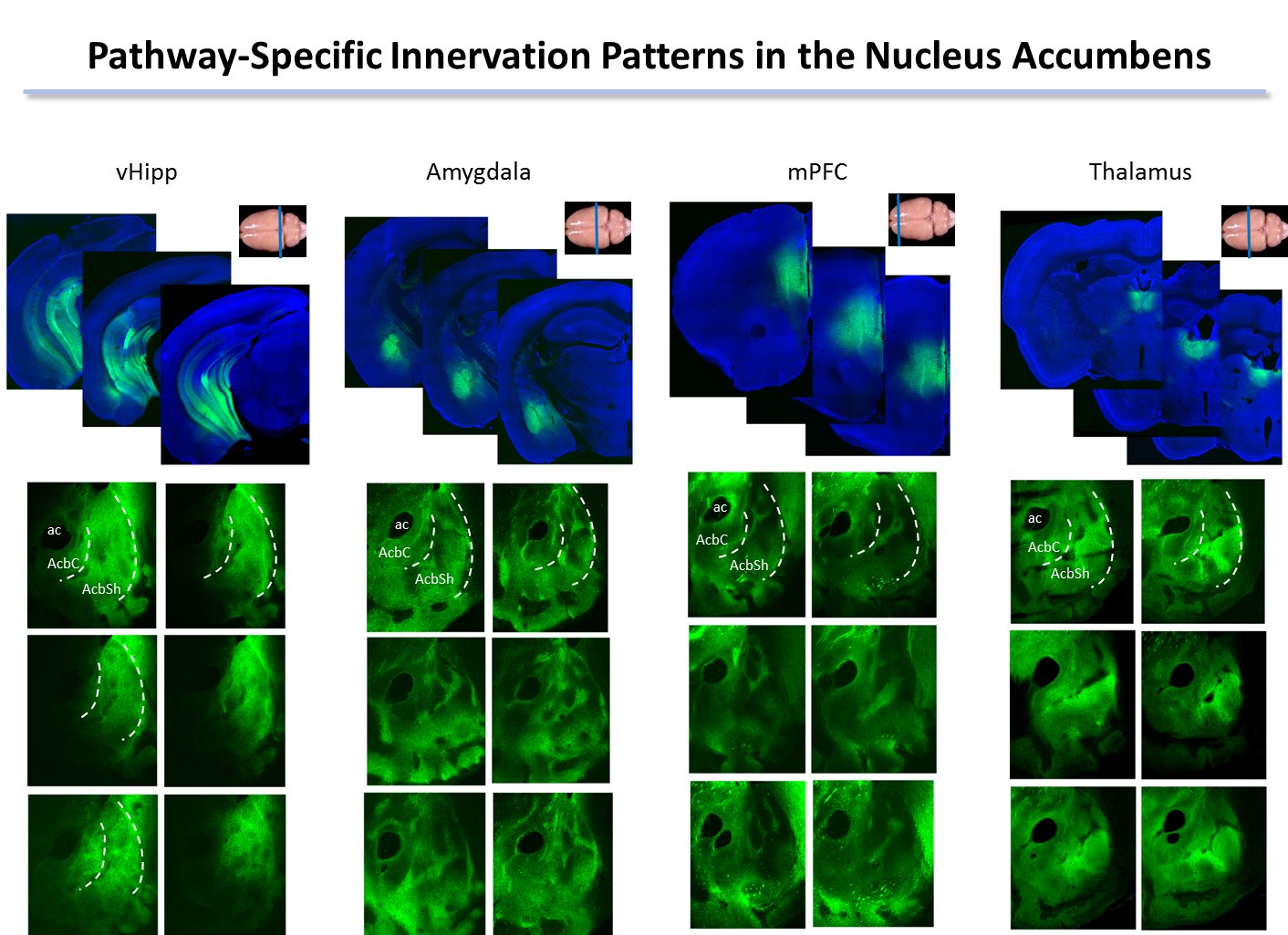
The accumbens receives excitatory input from the ventral hippocampus, basolateral amygdala, midline thalamus and prefrontal cortex. Comparing these pathways side by side, Jon's postdoctoral work found that hippocampal input is concentrated in the medial shell, and that activating any one of them is enough to reinforce behaviour. In the lab, fiber photometry from pathway-defined axons showed that the rostral and caudal shell are innervated by distinct, intermingled populations of forebrain neurons, and that each input carries mixed, opposing signals during reward seeking.

Key papers

Innervation of the nucleus accumbens by different input pathways.
02

Feeding and palatability

Consumption coincides with a coordinated, network-wide reduction in excitatory drive to the rostral accumbens shell, and reducing input from individual pathways is enough to promote feeding. Measuring palatability from the microstructure of licking, the lab found that low-frequency stimulation of ventral hippocampal input to the shell enhances how palatable a food is, independently of opioid signalling, and can condition a flavour preference. The same lick-microstructure approach shows that alcohol and alcohol-paired flavours gain palatability with repeated drinking.

Key papers

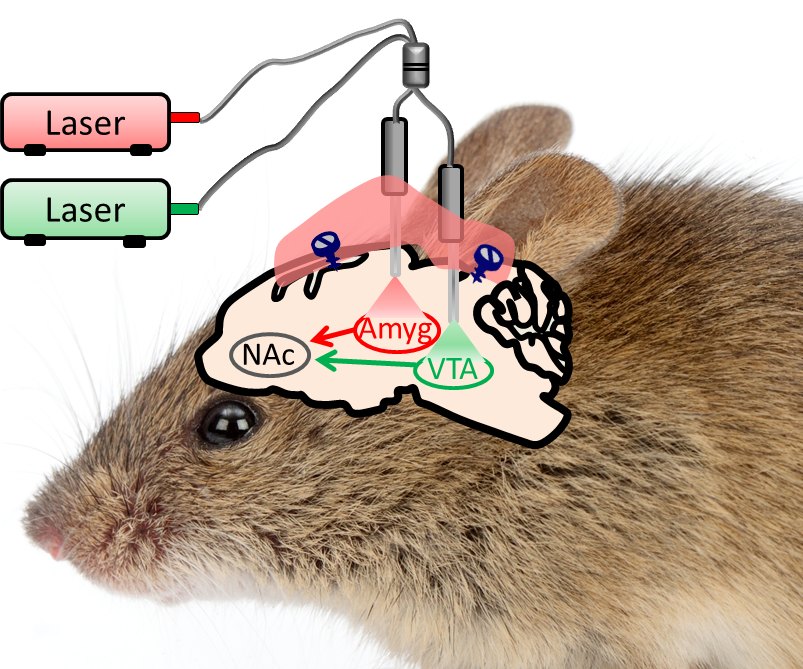
Optical stimulation of accumbens, amygdala and VTA circuits in the mouse. Illustration from the lab's original gallery.
03

Dopamine, value and disengagement

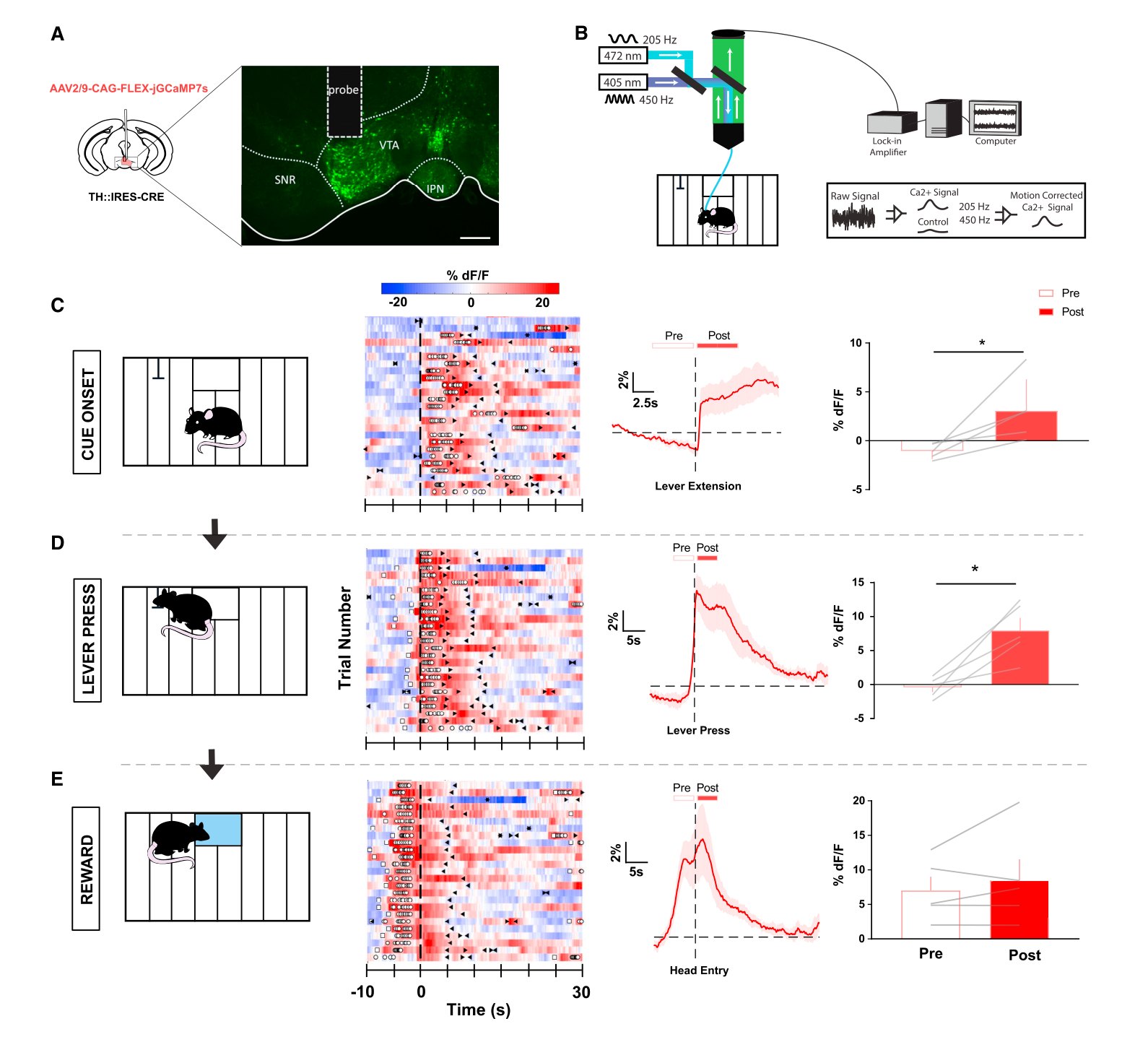
Bidirectional optogenetic manipulation of dopamine neurons during a trial-based choice task showed that cue-evoked dopamine helps maintain cue–value associations but does not encode expected value. More recent work finds that dopamine in the medial accumbens shell reinforces actions while simultaneously limiting how long they last, through D1 receptor signalling.

Key papers

Dopamine neuron activity during lever presentation, lever pressing and reward. Mendoza et al., Cell Reports 2019, Fig. 1 (CC BY 4.0).
04

Holding back unproductive reward seeking

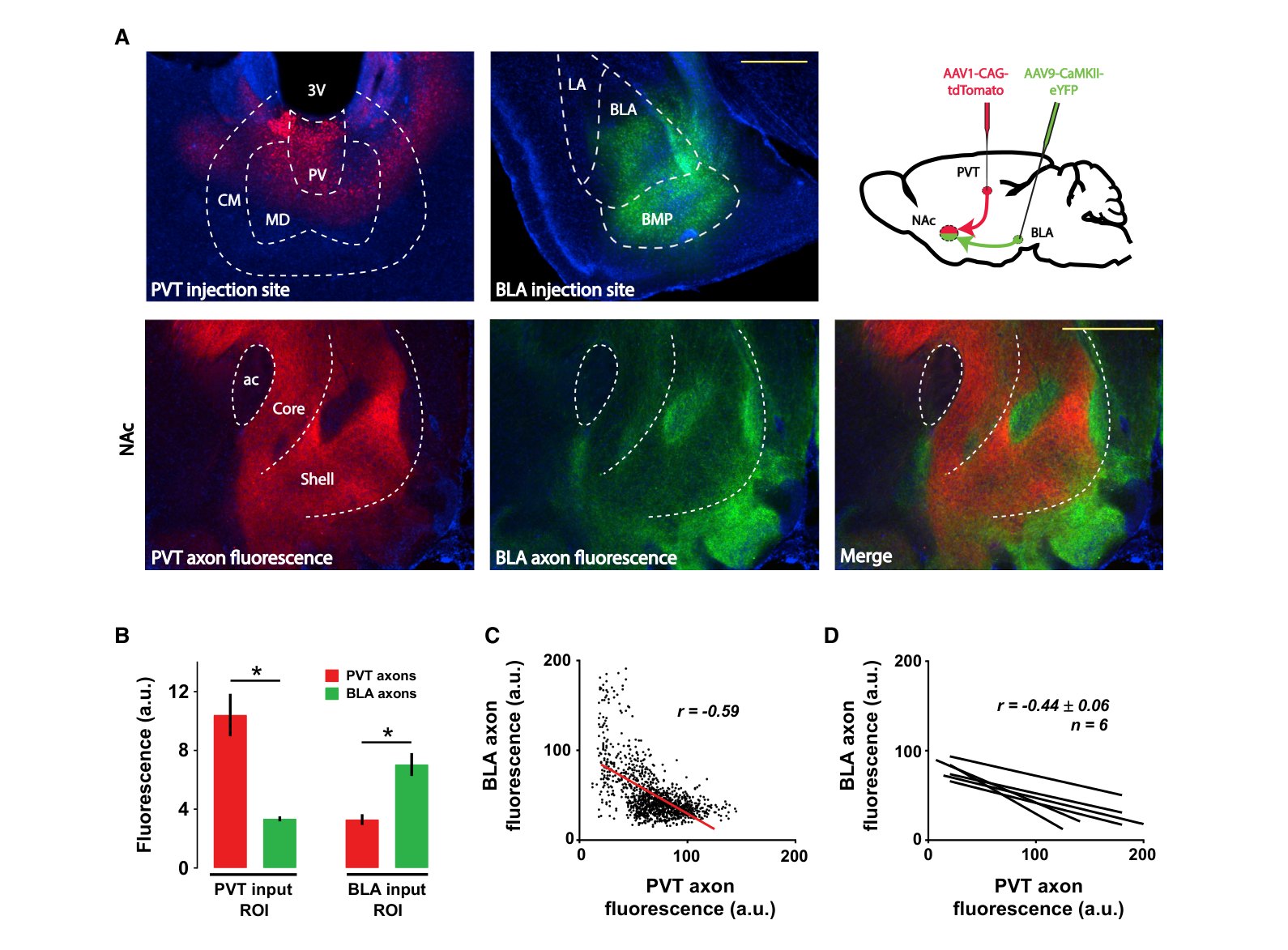
Efficient reward seeking means knowing when not to respond. Direct and indirect pathway neurons of the accumbens are both more active when behaviour is suppressed, and inhibiting either one increases unproductive responding. Amygdala and thalamic inputs, which innervate different accumbens subregions, are both required as well, pointing to complementary rather than opponent processes.

Key papers

Thalamic (PVT) and amygdala (BLA) axons innervate distinct areas of the nucleus accumbens. Lafferty et al., Cell Reports 2020, Fig. 3 (CC BY-NC-ND 4.0).
05

Sharper tools for circuit neuroscience

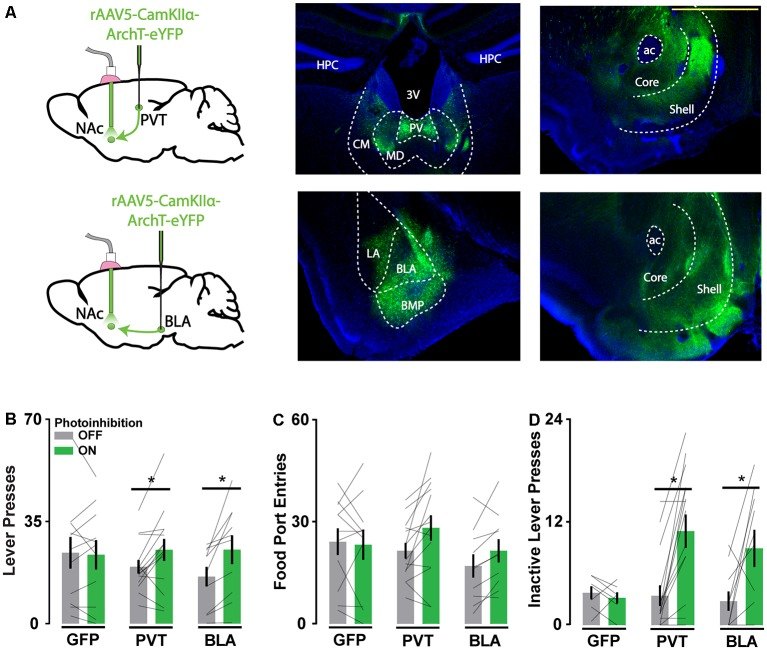
Axon-terminal silencing with archaerhodopsin is widely used to test pathway-specific contributions to behaviour. The lab showed that it also increases spontaneous transmitter release and recruits local inhibition, producing the same behavioural effects regardless of the pathway targeted, and that cell-body inhibition is a more specific alternative. A review lays out all-optical approaches that record and manipulate circuits at the same time.

Key papers

ArchT-mediated inhibition of thalamic and amygdala axons in the nucleus accumbens. Lafferty & Britt, Front. Neural Circuits 2020, Fig. 1 (CC BY 4.0).

Collaborations

Working with colleagues across McGill

Proceedings of the National Academy of Sciences of the United States of America · 2021

Psychedelics and social behaviour

Repeated LSD administration promotes social behaviour in mice, and requires mTORC1 in excitatory neurons to do so.

De et al. · doi:10.1073/pnas.2020705118

Translational Psychiatry · 2023

Epigenetic regulation of autism-risk genes

Loss of the methyl-CpG binding protein Mbd2 alters hippocampal gene expression and produces cognitive, social and emotional deficits.

Lax et al. · doi:10.1038/s41398-023-02561-9